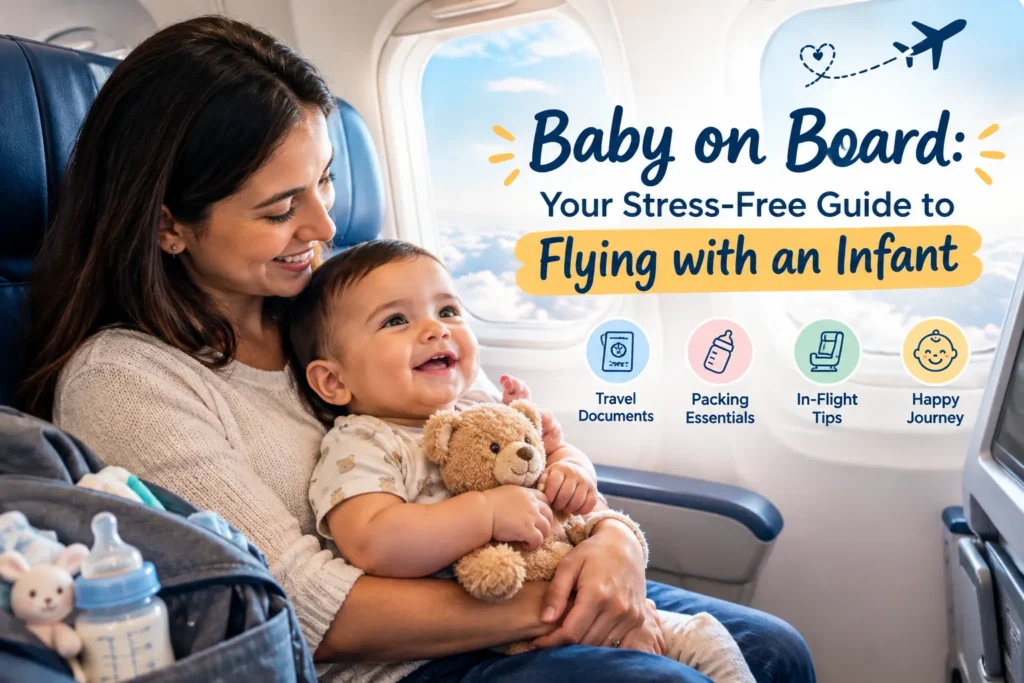
Flying with an infant on board can be frightening, particularly for those whose experience lies in carrying an infant on their flights for the very first time. It would help a lot if one is prepared to know the airline’s policy regarding infants.
Infant policies among airlines vary with regard to age limit, fares, seats, baggage and documentation. Parents are thus advised to look up the policies of that particular airline before making bookings. This article provides information on the basic guidelines to be considered while flying with an infant.
Flying With an Infant: What Parents Should Know Before Booking
Check whether your infant will qualify as a lap infant or will require a seat before you make your booking. It is worth noting that in some jurisdictions infants under the age of two can travel on an adult’s lap.
The most secure thing to do would be to use an FAA-approved child restraint system in a seat meant for the child. The FAA highly encourages an FAA-approved child restraint system over restraining a child in the lap of the parent.
When flying with an infant, check these details before paying for the ticket:
| What to Check | Why Does it Matters |
| Infant Policy | Establishes age restrictions, costs, and travel requirements |
| Infant Fare | Some airlines apply a percentage of an adult ticket or applicable taxes/fees |
| Separate Seat | Mandatory if you wish for your infant to use a certified restraint device |
| Choose Your Seat | It enables parents to plan their seat arrangements ahead of time |
| Seat Selection Fees | It applies based on certain airlines and tickets purchased |
| Baggage Allowance | Infant baggage, strollers, and car seats may have different regulations |
| Documents | Passport and visa may be required for international flights |
Knowing the Infant Policy of the Airline
The most crucial thing to do when traveling with an infant is knowing the policy of that airline with regard to infant travel prior to booking.
Look up the infant policy of the airline on their website, especially when traveling abroad. There could be some special rules set by certain airlines concerning baby policies, medical clearance, bassinets, or infant capacity in certain seating sections.
Restrictions on seating for passengers with babies are also imposed by airlines’ systems and policies. The IATA states that restrictions could be determined by the airline, aircraft type, and relevant regulations.
When you have doubts regarding the information, call the customer support service before finalizing your booking. In this way, you will be able to avoid any inconvenience on arrival.
How to Book a Plane Trip for Your Baby
When making a booking, provide your baby’s information accurately, instead of considering your baby as an adult traveler. If it is not clear on how to go about it while booking online, phone booking could be helpful.
Some parents find it easier to book a flight by phone when they have any questions regarding infant airfares, bassinet availability, seats, and assistance. If you go with phone bookings, make sure the agent verifies the status of the baby on the booking.
When considering an affordable flight booking option, take into account the total price instead of just the advertised price of an adult ticket, which can become much more expensive with additional services.
In the same manner, while cheap flight booking, one must take into consideration all the expenses involved. A low basic airfare doesn’t automatically translate to lower overall costs for a family.
Reservation booking checklist
Before finalizing your reservation, you should confirm:
- Name and date of birth of infant
- Infant’s fare or taxes
- Infant travel policy
- Baggage allowance
- Availability of seat selection
- Seat selection charges
- Availability of bassinet, if provided
- Required documents for travel
- Airline contact information
The Selection of the Right Seat for Traveling with an Infant
It becomes crucial to choose seats when traveling with an infant. If possible, you should select seats together during booking.
It is advisable for parents to consider how the infant will be comfortable while selecting your seat depending on the needs of the infant and constraints of the airplane. Aisle seats may be convenient in terms of accessing the bathroom or moving about with the baby for some time.
Be aware that seat selection fees can differ depending on the airline, the destination, and even the class of ticket that you purchase.
It is important that if a person intends to use an approved child restraint system that they consult with the airline about their seat selection. The FAA recommends that parents speak with the airline as the proper seating may vary by airplane and airline.
Additionally, parents need to be aware of the extra costs for seat choice before making any bookings.
Baby Travel Baggage
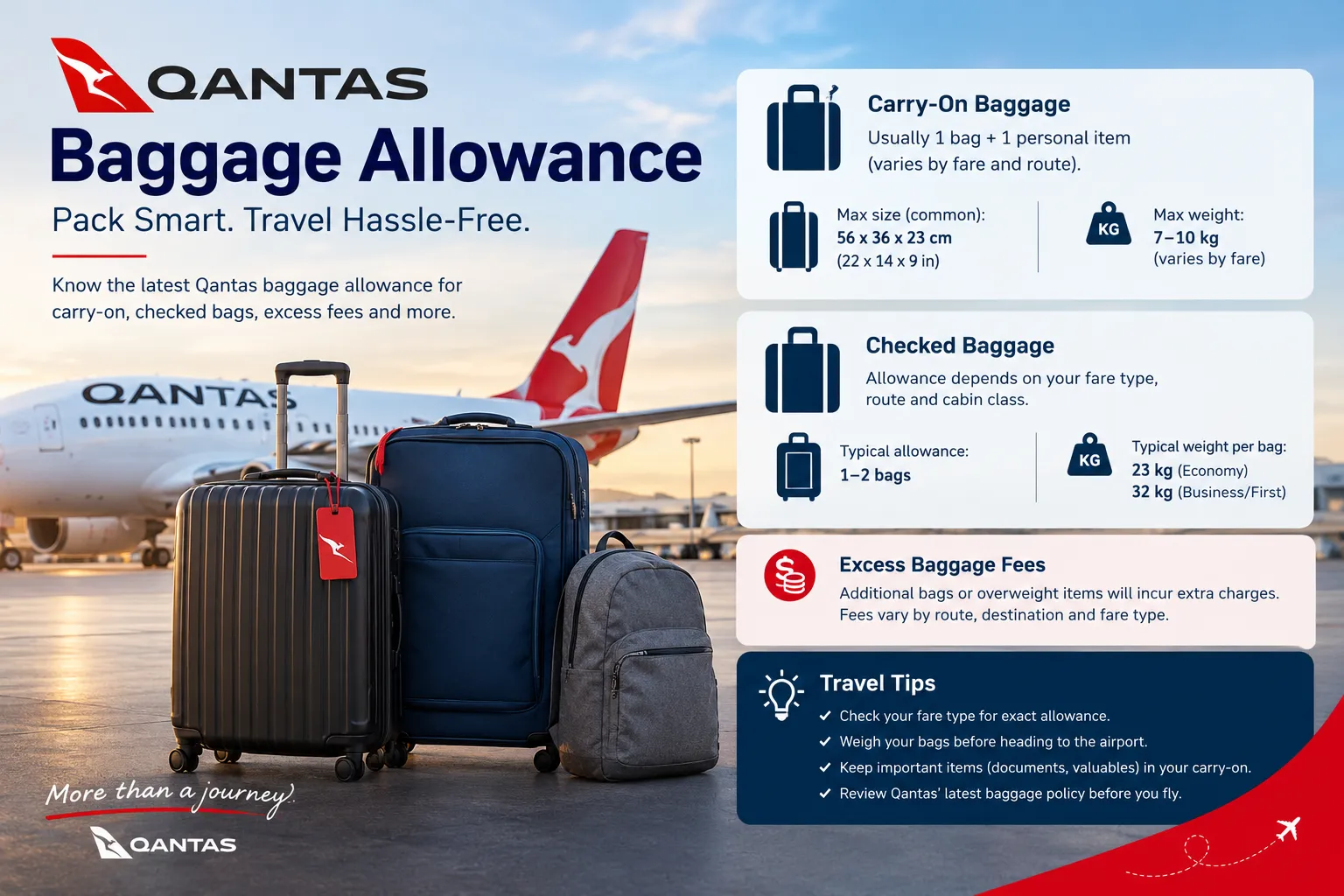
Traveling by air with an infant normally means that one needs to pack additional items. It is recommended to first seek information from the airline companies on luggage policies.
It is possible that different airlines may allow strollers, baby carriers, diaper bags, and other items for the infants. It should be noted that all airlines do not provide similar allowances, hence, should not be assumed as such.
| Baby Travel Item | Points to Check |
| Diaper Bag | If it is included in the allowance for cabin baggage |
| Stroller | Gate check or check-in process |
| Car Seat | If it is allowed on board or should be checked |
| Baby food/formula | Security screening process |
| Extra Luggage | Allowance and charges for baggage |
However, in case you want more luggage, see if adding luggage is possible while making your reservation. Many airlines have an option to add baggage after booking also.
Knowing about checked bag fees prior to traveling will help avoid airport surprises. Similarly, you need to know about extra baggage fees for the additional requirements of your baby.
In case you would like to add baggage later on, it is recommended that you check the cost and allowance through the airline’s website or customer support.
Parents are also advised to take into account the extra bag fee against that of taking less baggage when traveling. There is always room for reorganization.
Documents Required by an Infant for Air Travel
The type of documents required by the infant depends on the destination and the nature of the flight.
For international air travel with an infant, you should verify your passport and other entry requirements before embarking on the journey. There may be more documentation required for children who are traveling with one parent or a guardian.
When traveling domestically, the requirements differ according to the country and airline involved. In the United States, for instance, the TSA stipulates that kids below the age of 18 years are not required to carry ID when traveling domestically.
Always check requirements with the airline and the concerned authorities before travel.
Infant Formula and Security Screening
Parents can worry about bringing breast milk, infant formula, water, or baby food through airport security.
For those traveling from airports in the U.S., TSA allows an amount of formula, breast milk, toddler formula and baby food above the normal 3.4 oz liquids limit. It is advisable for the parents to inform the TSA official during the start of screening about having such items.
Other countries may have different rules, so check your local airport or security authority before flying.
For current advice in the U.S., parents should refer to the TSA’s official “What Can I Bring?” guidance.
Can You Alter Your Booking When Traveling with a Baby
Sometimes your travel plans might get altered while traveling with a baby. It is advisable for you to look into the airline’s change flight policy prior to making a booking.
If you wish to change flight date of your travel, it is important to know the fare rules and any charges that may apply when making such changes.
Parents are also supposed to check out the flight reschedule and fees clause in their fare conditions. Having knowledge about the change flight policy beforehand could simplify things for them.
In case you need to change your flight schedule, it is recommended to use the booking management facilities of the airline. In case you have any questions concerning the rescheduling and fees, contact customer support.
Before You Fly: Infant Travel Checklist
Use this checklist before leaving for the airport:
- Confirms the infant policies of the airline
- Confirms the booking information of the infant
- Passports and other documents checked
- Secure your seat and confirm seating
- Seat selection charges confirmed
- Baggage allowance confirmed
- Package the diapers, wipes, clothing and feeding items in your carry-on baggage
- Check security requirements regarding baby food and formula
- Check procedures for taking stroller and car seat
- Check airline’s customer support details
- Check flight status prior to departing for airport
For further guidelines to ensure safety of the child, the parents should seek the guidelines from the Federal Aviation Administration’s official guidance on flying with children. The FAA suggests that young children use a child-restraint device for safety purposes.
Concluding Words
Air travel with babies need not always be difficult. It all boils down to planning the trip keeping your child’s requirements in mind along with the airline’s policies.
First, check the infant policy, double-check the fare, choose your seat, and learn about the seat selection fees. In case of any luggage change or increase in baggage, arrange everything before arriving at the airport.
Above all, note that airline policies vary. It is always best to confirm with your airline for the current policies.
Disclaimer: Baby rules differ for flights depending on each airway, and it is important to consult your airway company for more details on the policy. Babies usually have to be less than 24 months, weigh below 22 pounds (10 kg), and be charged for infant fares.
Prepared for planning the next trip for your family? Discover the options you have regarding flights with the help of ASAPTrips.
FAQs
Can I take a flight with an infant in the United States?
It is possible to travel by air with infants in general, although some airlines will set minimum- age limit for infants. Please ensure you know your airline’s infant policy before making any arrangements.
Is it necessary to have a seat for an infant on the plane?
Not necessarily. In the United States, infants under the age of two years can ride on an adult passenger’s lap while flying domestically, even though the FAA strongly advises parents to use child restraints in their own seats during the flight. You should find out if your car seat is allowed onboard.
Do infants travel without restriction on U.S. airlines?
Not always. If an infant travels as a lap child, then he or she may have to pay different fares or charges, based on the airline being used, and whether the journey is a domestic one or an international one.
Is it okay for me to carry my baby's stroller and car seat on a flight?
Parents are permitted by many airlines to fly with strollers and car seats, but how these items should be handled is determined by airlines. While some items are required to be checked either at the ticket counter or gate, the approved car seat can be carried aboard if there is a separate seat for the baby.
How much can I carry in my handbag when I travel with my infant?
Some of the things that can be included in the parent’s luggage are diapers, baby wipes, additional clothing, baby feeding supplies, baby food or formula, any medicines, and other similar things. There are specific regulations by TSA for baby liquids and foods for flights out of U.S. airports.
Can I carry breast milk or formula through the TSA security checkpoint?
Yes. TSA permits you to bring breast milk, formula, and other toddler or infant beverages that exceed the limit of 3.4 ounces provided you travel with a child. It is important that you inform the TSA agent at the start of the screening process.
Is there any need for seat reservation in advance when flying with a baby?
It will be easier to travel with a baby if one reserves a seat in advance, especially if one intends to sit together with the rest of his/her family members. However, some airlines impose charges on the seat reservation while others may have restrictions regarding seating of passengers with babies.
What documentation will my baby need for air travel?
The kind of documentation that is needed will depend on the destination as well as the airline that you will be using. In case it is an international journey, then the baby will be required to have the appropriate travel documentation such as a passport and possibly a visa.
Is it possible to alter my booking in case my baby falls ill?
This would depend on the change flight policy of the airline in question, and also the kind of ticket that has been purchased since some fares offer more options for alterations than others. The change process may also be subject to a fare difference or additional fees.
How should you prepare your child for his/her first trip?
First of all, you should make sure that you have familiarized yourself with the policy of the airline towards babies, your child is properly booked, there is no problem with the luggage allowance, and whether you would require an extra seat. It would be advisable to get your seats booked well in advance and carry all the necessary supplies for your baby in your hand luggage.